
Mississippi Arrest Records and Charges
Mississippi arrest records begin with an agency's custody action. Booking can record identity, arrest time, agency, accusations, photograph, fingerprints, property, holds, and bond. A prosecutor later reviews reports and evidence. A filed accusation becomes a court count with a statute, offense description, severity, and status. An arrest may produce no later filed charge, while a charge can begin by summons without a custodial arrest. An indictment may also precede a later capias arrest.
The sheriff or police custodian holds booking and incident records. The Circuit Clerk keeps a filed felony case, while Justice, Municipal, or County Court clerks keep many lower-court charges. For current custody use Mississippi inmate records. The court charge record is the better source for whether the prosecutor filed, reduced, dismissed, or resolved a count.
Find Mississippi Arrest Records
Start in the arrest county, but check the filing venue because city and county court routes can differ. Search Mississippi Electronic Courts and PAMEC only for participating trial courts. The service is not every county, lower court, or historical file. Use the county directory for the sheriff, Circuit Clerk, and relevant lower court when online coverage is absent.
- Ask the sheriff or police custodian for the releasable booking or arrest record.
- Search PAMEC where the filing court participates, or contact the local clerk.
- Match by defendant, cause number, agency, offense date, and court.
- Read every count's statute, severity, amendments, and final status.
The Mississippi Department of Public Safety Criminal Information Center maintains the authorized, fingerprint-linked state repository. It can aggregate submitted arrests, charges, dispositions, and expunction actions, but it is not an open public NCIC browser. The county record remains the source for charging documents and a certified disposition.
Mississippi Charging Documents
Investigation may lead to arrest or citation, booking, initial appearance and bond, prosecutorial review, and a grand-jury presentation for a felony where required. The accusation then proceeds toward arraignment, dismissal, plea, or trial. The document type matters because each states an allegation, not proof of guilt.
| Complaint | Information | Indictment | |
|---|---|---|---|
| Source | Sworn accuser or officer | Prosecutor | Grand jury |
| Use | Initial accusation, common in lower courts | Formal accusation where Mississippi procedure permits, often with waiver | Formal felony accusation finding probable cause |
| Meaning | Allegation | Allegation | Not a conviction |
Mississippi Charge Status
Read each count across time. A booking label can differ from the formal accusation. The prosecutor may decline, amend, reduce, or end a charge, and several counts can reach different outcomes. Match the final order to the same cause number and court.
| Status | What It Means |
|---|---|
| Pending | Filed and unresolved, with no finding of guilt. |
| Amended or Reduced | The prosecuting count changed from its earlier wording or severity. |
| No Bill | The grand jury declined to indict on that presentation. |
| Nolle Prosequi | The prosecution formally chose not to proceed at that time. |
| Acquitted | A not-guilty adjudication after trial. |
Mississippi Charges and Convictions
An arrest and charge both record accusations. A conviction requires a guilty plea or verdict followed by judgment. One arrest can produce several counts, and each can end differently. A dismissed charge, no bill, nolle prosequi, or acquittal must not be reported as a conviction. Verify the signed judgment rather than inferring the result from custody or the first docket entry.
| Charge | Conviction | |
|---|---|---|
| Stage | Accusation | Verdict or plea |
| Burden of Proof | Probable cause | Beyond reasonable doubt |
| Effect | May change or end without guilt | Supports judgment and sentence |
Mississippi Sealing and Expungement
Sealing limits access under an order or confidentiality rule. Expungement under Mississippi Code section 99-19-71 depends on the offense, outcome, history, and timing. It is not automatic. Obtain the certified disposition, file in the court controlling the eligible matter, complete required notice, and keep a certified granted order. CIC Special Processing applies transmitted expunction orders to the state history. Private cached copies may require a separate dispute.
| Sealed | Expunged | |
|---|---|---|
| Basis | Order or confidential subject matter | Eligible case and court order under state law |
| Public Effect | Access restricted as directed | Removed from ordinary dissemination as directed |
| Official Access | Authorized access may remain | Some official uses may remain authorized |
Mississippi Charge Codes
A filed count may show a Mississippi Code citation, literal offense, offense date, felony or misdemeanor level, and count number. Mississippi penalties are offense-specific, so another state's class labels must not be imposed. Felonies generally proceed in Circuit Court. Justice and Municipal Courts handle many misdemeanors, citations, and preliminary matters, while County Court has a role where it exists. The court level identifies the clerk holding the source record.
Mississippi State Criminal Histories
The Criminal Information Center is the state's repository and fingerprint identification authority. Its release form requires identification, authorization, notarization, and a $32 money order, with posted processing of up to 30 days. A fingerprint-based result offers stronger identity matching than a name check. Correct an incomplete disposition by obtaining the certified court outcome, then following CIC correction procedures.
The official CIC livescan and cardscan materials describe the continuing state criminal-history workflow.
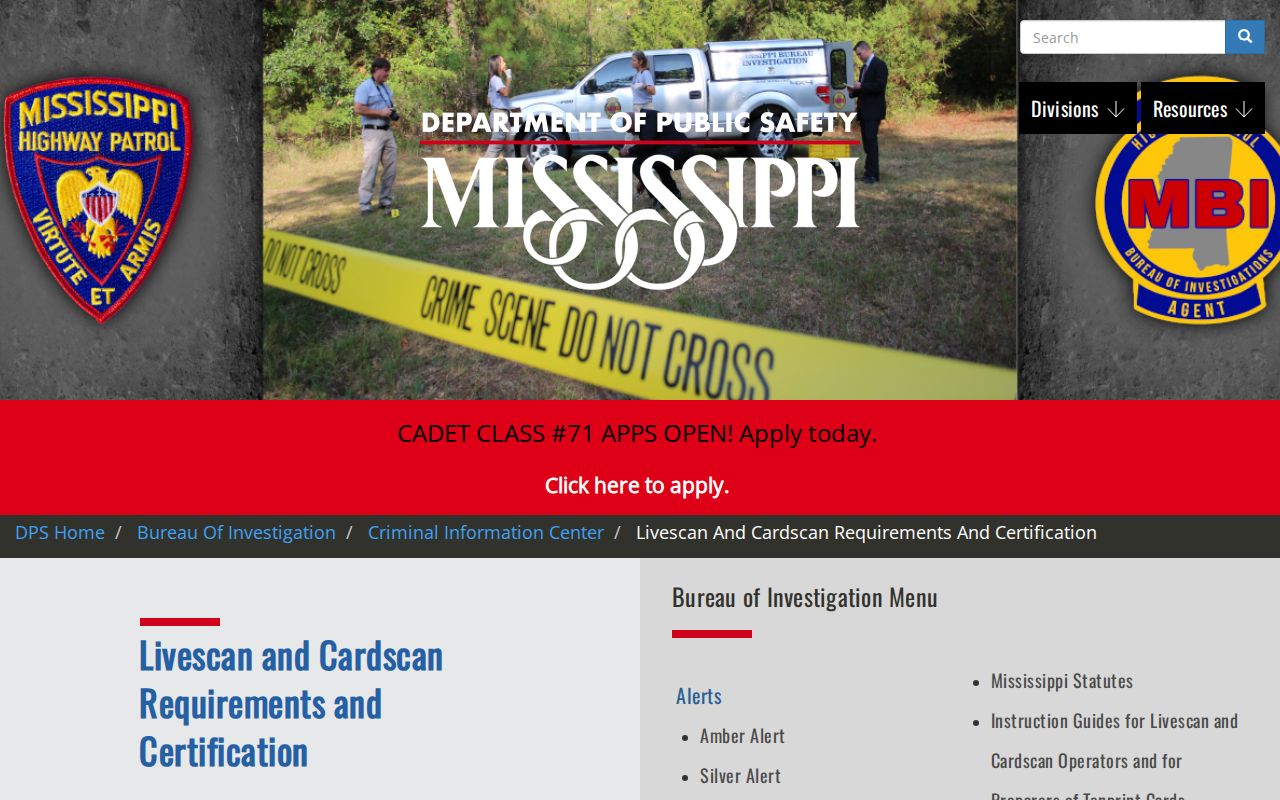
The agency system is an authorized repository process, not an open consumer defendant search.
For other releasable state police material, MDPS NextRequest accepts public-record requests.
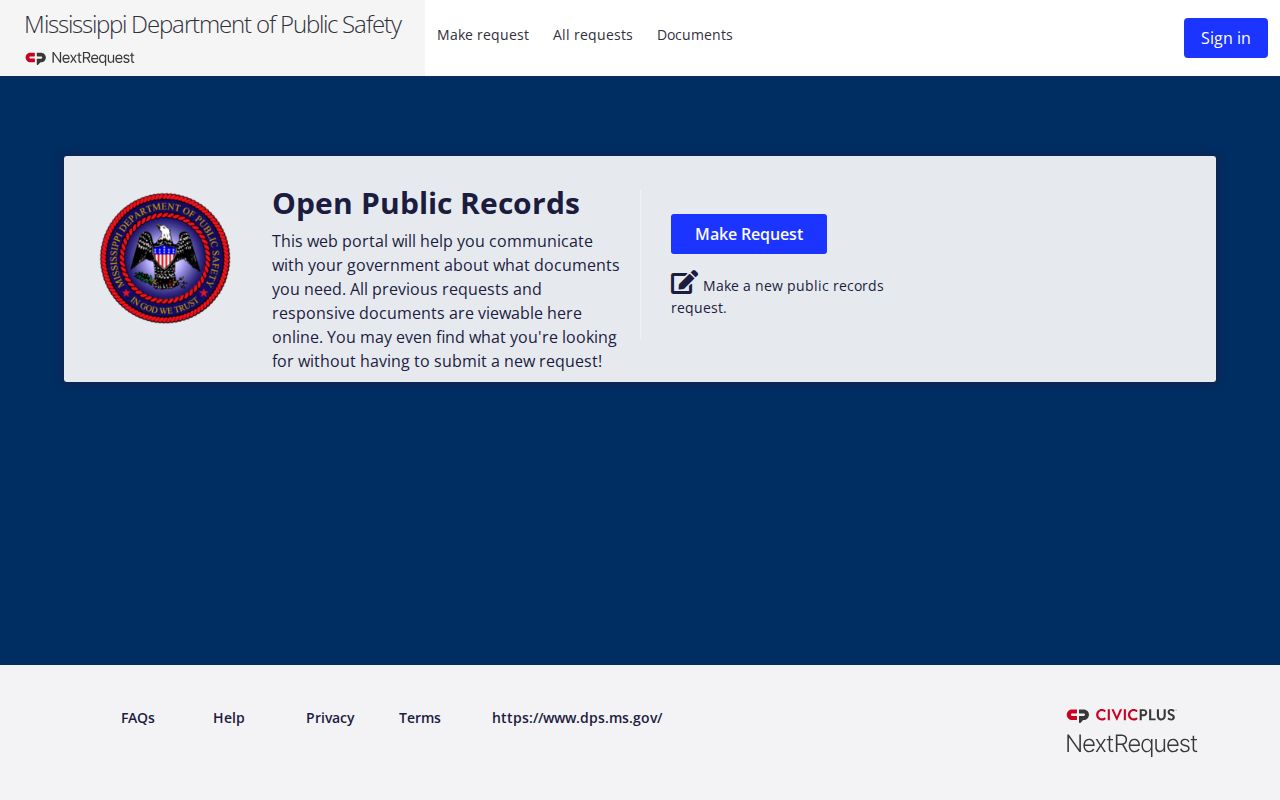
NextRequest does not replace a certified CIC history or the county court's charging document.
Federal and Consumer Checks
Federal charges in Mississippi are separate from state and county cases. The Southern District U.S. Attorney and Northern District U.S. Attorney publish official district information. Their records do not turn a state booking into a federal conviction.
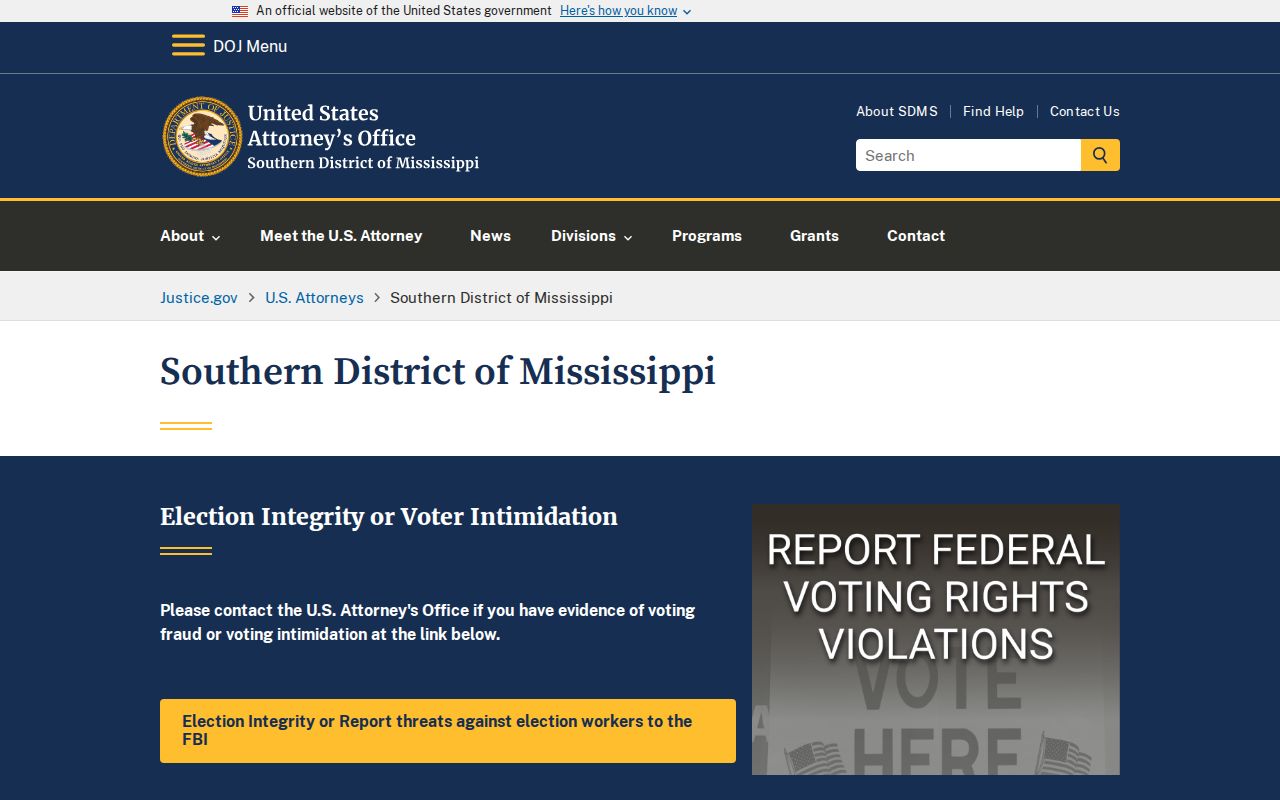
The Southern District source marks the federal route for cases filed there.
The Northern District maintains its own office and prosecution records.
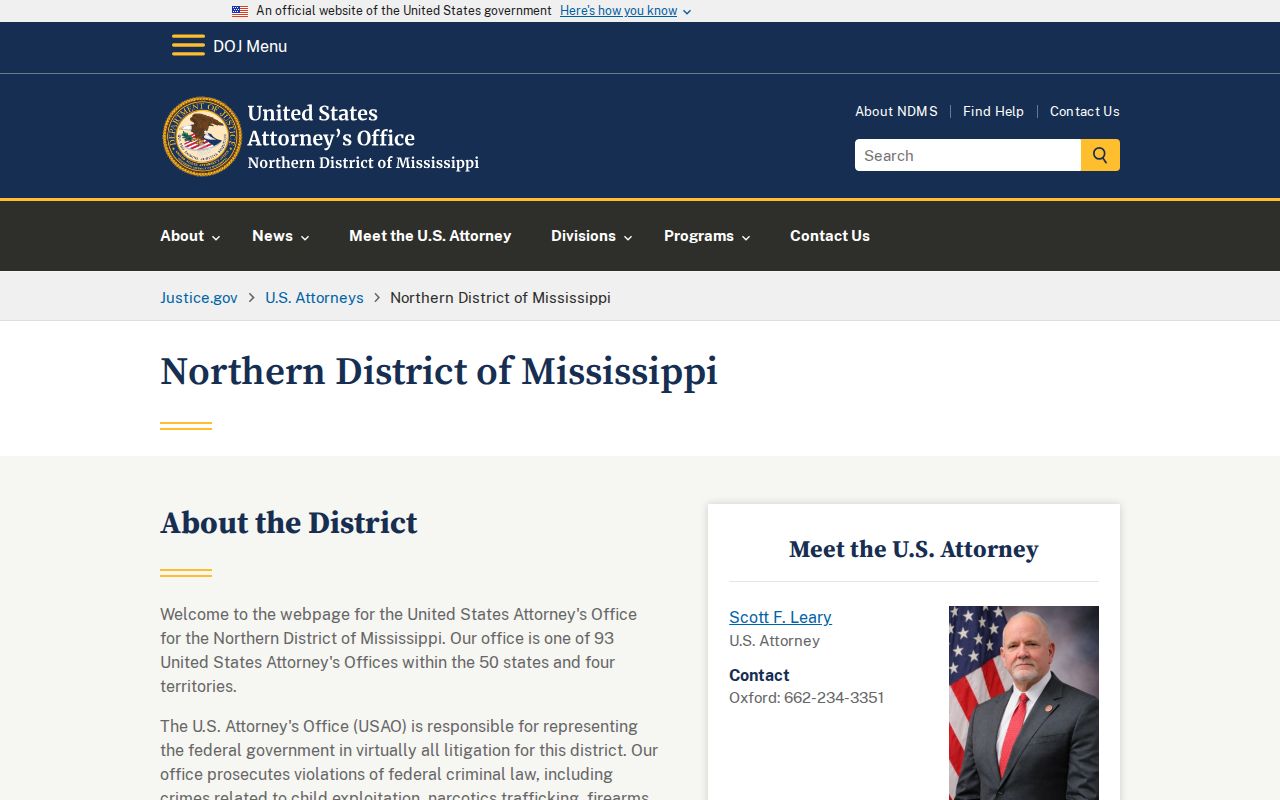
Neither federal office is a statewide Mississippi arrest-record database.
Use of arrest or charge data for employment, housing, credit, insurance, or another consumer decision can trigger Fair Credit Reporting Act duties, including permissible-purpose and adverse-action rules. Public access alone does not make raw allegations suitable for such decisions.
Important: Verify identity and final disposition at the source court before drawing conclusions from a Mississippi arrest or pending charge.
Restricted Mississippi Charge Records
Youth Court records are confidential under Mississippi law. Sealed and expunged matters follow their orders. Active investigations, grand-jury material, prosecutor work product, victim information, medical evidence, and protected addresses may be withheld. Personal identifiers are redacted from otherwise public records. A narrow request to the creating agency should name the arrest, incident, booking, or charging document sought and ask for segregable public portions when an exemption applies.
A useful Mississippi request separates records by custodian. Ask the arresting police department or sheriff for the arrest or incident report. Ask the jail for the booking sheet, intake date, agency charge, bond ledger, hold, and release entry. Ask the prosecutor only for releasable charging-decision material, recognizing that grand-jury secrecy, work product, active-investigation, and victim protections may limit disclosure. Ask the clerk for the complaint, indictment, information, docket, and certified disposition. One broad request sent to the wrong office may be delayed because that office did not create or keep the document.
The Mississippi Public Records Act permits reasonable procedures and actual search, review, redaction, and reproduction costs for nonexempt public-body records. Judicial files also remain subject to court control and sealing rules. State the county, agency, subject, arrest date, cause number, and exact document. Ask for electronic delivery and a cost estimate. Inspection may avoid copy charges, but staff research or archive retrieval can still carry a lawful cost. If access is denied, request the cited exemption and any segregable redacted portion.
Corrections require the same custodian split. A wrong booking date or agency label belongs with the jail or arresting agency. A wrong filed count or disposition belongs with the court. An incomplete statewide history requires a certified court outcome followed by CIC procedures. Keep copies of each request, response, and order. Do not use a prosecutor's initial charge label to overwrite a later court judgment, and do not use a court dismissal to assume the separate booking event never occurred.
Mississippi records should always be matched with more than a name. Use the cause number, booking number, birth data when lawfully available, court, county, arresting agency, and offense date to avoid combining different people or separate cases. Compare the arrest date with the court filing date because charges may be filed later, amended, reduced, dismissed, or replaced by an indictment. A missing jail profile may mean release or roster removal, not that the arrest record or court charge ceased to exist.
Note: A jail charge label may be incomplete or stale, so the certified court disposition controls the final judicial outcome.