
Mississippi Criminal Case Files
A criminal court record begins when an accusation becomes a filed case. It is not a police report, booking sheet, or complete investigative file. The clerk's file may show the cause number, defendant, counts, indictment, counsel, bond and capias events, pleas, motions, hearings, rulings, verdict, disposition, sentence, restitution, costs, probation, and appeal. Discovery exchanged between parties does not always become a public filing. Mugshots and jail bond ledgers remain sheriff or police records. The separate Mississippi arrest and charge record covers the earlier custody and charging stage.
Mississippi Circuit Courts have general felony jurisdiction, and Circuit Clerks keep those files. Justice and Municipal Courts handle many misdemeanors, citations, initial appearances, and preliminary felony matters. County Courts in 23 counties can hear limited criminal matters. A name alone is not enough. Pair it with county, court, charge, and date because one person may have records in several local systems.
Search Mississippi Criminal Records
Mississippi Electronic Courts supports electronic cases in participating trial courts. Public access runs through PAMEC registration, a paid subscription service. Coverage does not include every county, lower court, old paper file, or sealed matter. A missing result does not prove no case exists. Use the Mississippi county directory to reach the clerk holding the original file.
- Identify the county and whether the matter is a felony, misdemeanor, citation, or lower-court appeal.
- Check MEC participation, then search PAMEC by full name or exact cause number.
- Preserve letters and hyphens and narrow by court or filing date when available.
- Read every count and final disposition instead of relying on the first charge label.
- Ask the filing clerk for omitted documents or a certified judgment when official proof is needed.
The Mississippi Department of Public Safety Criminal Information Center, or CIC, maintains a fingerprint-linked statewide repository. It can aggregate submitted arrests, charges, dispositions, and expunction actions. It is separate from PAMEC and is not an unrestricted public NCIC search. Subject, release-based, licensing, and regulated employment checks follow CIC procedures. The county file remains the source for pleadings, docket events, and certified outcomes.
The official CIC overview identifies the repository's fingerprint and criminal-history work.

The official page distinguishes a compiled state history from a single Mississippi criminal case docket.
Mississippi Criminal Case Stages
An arrest may lead to a complaint and initial appearance. A felony accusation commonly proceeds to a grand jury. An indictment states probable cause, not guilt. A no bill means the grand jury declined to indict on that presentation. Arraignment records the plea. Pretrial motions may address evidence, statements, venue, or the indictment. Dismissal, nolle prosequi, plea, or trial resolves the charge. A conviction leads to sentencing, and later motions or appeal may add entries.
Case flow: Charges Filed › Arraignment › Pretrial / Motions › Plea or Trial › Disposition › Sentencing
| Stage | What Happens |
|---|---|
| Arraignment | The accusation is acknowledged and the defendant enters a plea. |
| Pretrial / Motions | The parties litigate evidence, procedure, venue, and other issues. |
| Plea or Trial | A plea resolves selected counts, or a judge or jury decides guilt. |
| Sentencing | The order may state confinement, suspended time, probation, restitution, fines, costs, and credit. |
What Mississippi Criminal Records Show
Field labels vary among PAMEC and clerk systems. Mississippi cause numbers can include a year, sequence, and division or type marker, but there is no safe universal format. Keep every letter and hyphen, then verify the county and court.
| Field | What It Shows |
|---|---|
| Cause Number | The court identifier, meaningful only with its county and court. |
| Defendant | The accused person's name; aliases may appear while protected identifiers are redacted. |
| Counts | Each filed statute, offense description, and felony or misdemeanor level. |
| Plea | The response entered at arraignment or during a negotiated resolution. |
| Disposition | The result for each count, such as dismissal, acquittal, guilty plea, or verdict. |
| Sentence | The term and any suspended part, probation, fine, cost, restitution, or credit. |
Mississippi Charges and Convictions
A charge is an accusation. A conviction is a judgment of guilt after plea or verdict. Mississippi criminal records must be read count by count because an original charge may be amended, reduced, dismissed, or replaced in a plea. One count can end in conviction while another ends in nolle prosequi or acquittal. Pending never means guilty. A jail roster's agency label may also differ from the final court language.
| Charge | Conviction | |
|---|---|---|
| Stage | Accusation | Verdict or plea |
| Burden of Proof | Probable cause | Beyond reasonable doubt |
| Result | May change or end without guilt | Creates a judgment and may lead to sentence |
Read Mississippi Case Outcomes
Disposition is the result, not the next setting. Nolle prosequi records the prosecution's decision not to proceed at that time. No bill means a grand jury declined to indict on the presentation. Dismissed and acquitted are distinct. Read a sentence with the judgment and each count. Note the total term, suspended portion, probation, whether terms run concurrently or consecutively, credit, restitution, and costs. An appeal, modification, or revocation can change the practical result. Obtain the signed order when a docket summary is unclear.
Mississippi Sealed and Expunged Records
Sealing restricts access under an order or subject-specific law. Expungement under Mississippi Code section 99-19-71 is a statutory process for eligible records. It is not automatic, and eligibility depends on offense, outcome, history, and timing. A request generally begins in the court that controlled the case. Obtain a certified disposition, identify every count, file the required petition or motion, notify required parties, and keep certified copies of a granted order. CIC then applies transmitted expunction orders to the state history.
| Sealed | Expunged | |
|---|---|---|
| Source | Court order or confidentiality rule | Eligible record and court order under state law |
| Public Access | Restricted as directed | Removed from ordinary public dissemination as directed |
| Official Use | Authorized access may remain | Some official uses may remain authorized |
Mississippi Criminal Record Access
The filing court controls its judicial record under the Mississippi Constitution, court rules, sealing orders, and subject-specific law. The Mississippi Code gateway provides current statutes. The Public Records Act governs nonexempt agency records and permits reasonable procedures and actual costs, but it does not override a sealed court file. A focused request names the county, court, cause number, defendant, dates, and exact document. Ask to inspect if copies are not needed and request a written estimate.
Key Statutes:
Miss. Code Ann. §§ 25-61-1 through 25-61-19 set the framework for nonexempt agency records.
Miss. Code Ann. §§ 43-21-251 and 43-21-261 restrict ordinary access to Youth Court records.
Request a Mississippi CIC History
The official CIC release instructions require legible authorization, identity data, a state ID or driver license copy, notarization, and a $32 money order. Posted processing may take up to 30 days. The form permits a fingerprint or name-based check and conditional release to a named third party. Fingerprints provide stronger identity matching than names alone.
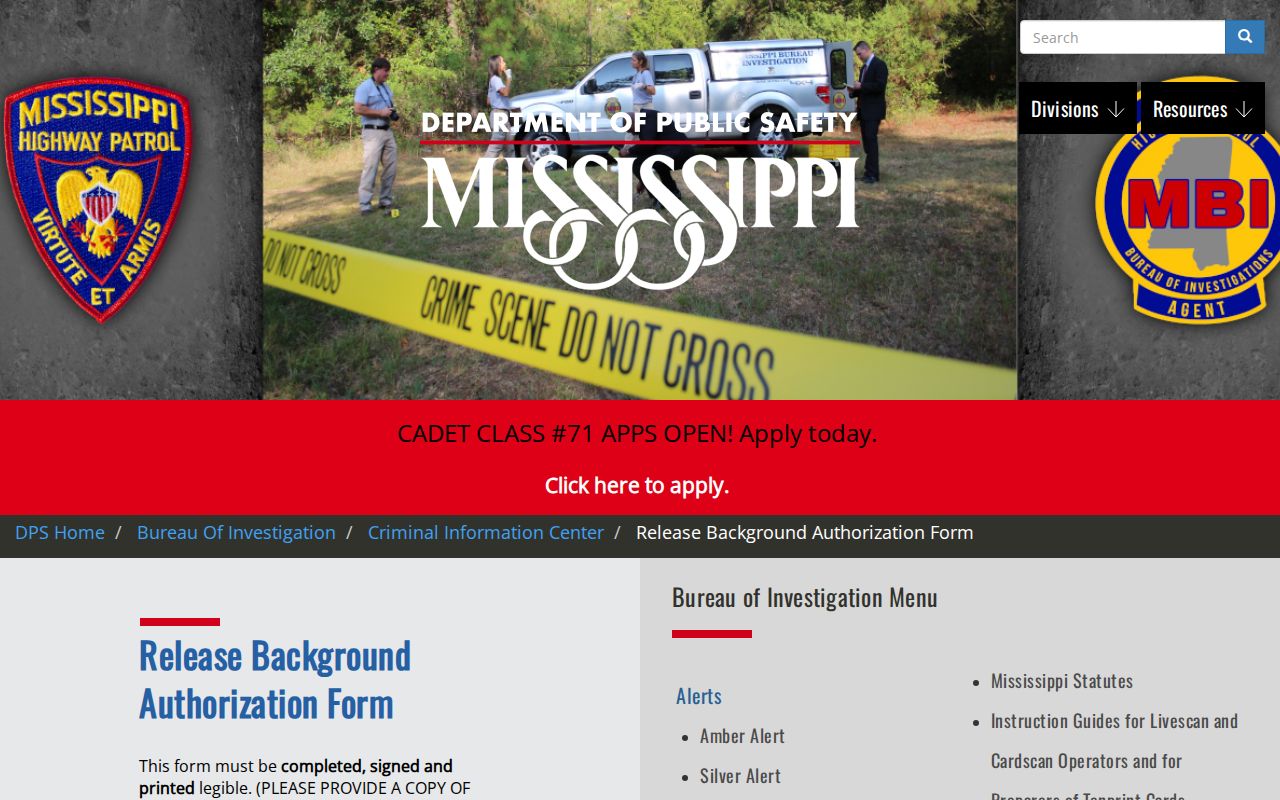
The form shows why a CIC history is an authorized request rather than a free public name search.
Important: Public court access does not remove Fair Credit Reporting Act duties for regulated employment, housing, credit, or insurance decisions.
Restricted Mississippi Criminal Records
Youth Court files are confidential. Sealed and expunged cases follow the controlling order. Clerks redact Social Security numbers, financial accounts, protected birth dates, minor identities, victim addresses, medical facts, and other protected data. Grand-jury material, active investigations, prosecutor work product, and confidential victim evidence may be unavailable. An absent online record can reflect restricted access rather than no case. Ask whether a redacted public portion or certified disposition can be released.
The Mississippi Sex Offender Registry is separate from the conviction file.
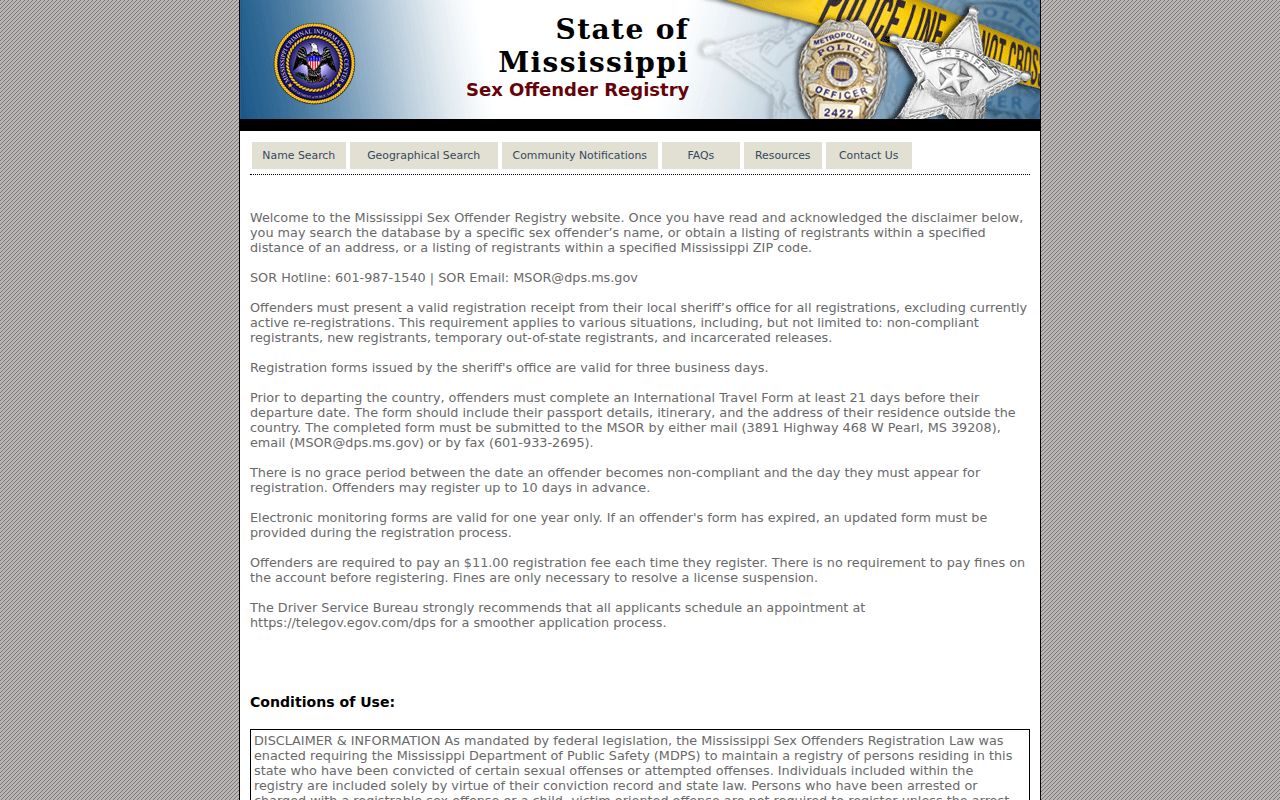
Registry data is not a complete case record or proof of current custody.
Accuracy work should begin with the court that entered the disposition. Ask the Mississippi Circuit Clerk or lower-court clerk for the signed order and a certified copy when an agency history is incomplete. Compare the cause number, each count, disposition date, and sentence. Then send that source record through the correction process identified by the agency reporting the mismatch. Name variations and missing disposition reports can produce an apparent conflict even when the arrest fingerprint belongs to the correct person. A certified court outcome resolves what happened judicially, while CIC controls the compiled state history.
Older Mississippi criminal records may exist only in paper files, manual indexes, archived docket books, or local systems that do not participate in MEC. A request should give the legal name used at the time, approximate filing year, county, court, charge, and any known cause number. Ask whether inspection, electronic copies, certification, transcript retrieval, or archive research carries a separate cost. Do not request an invented report. Identify the actual pleading, indictment, order, judgment, or docket entry needed.