
What Mississippi Court Dockets Mean
A docket is the court's ordered log of activity. It identifies the court, county, cause number, parties, case category, filing date, assigned judge or chancellor, and current status. Each later entry records a filing or court event, such as a complaint, petition, indictment, summons, return, answer, motion, hearing setting, continuance, order, judgment, sentence, appeal notice, or mandate. The entry date may differ from the date written on an attached document. A docket can show that an order was entered even when the order itself is not available online.
Mississippi docket custody follows the court. Circuit Clerks maintain Circuit criminal and civil dockets and often County Court records under local arrangements. Chancery Clerks maintain divorce, custody, probate, guardianship, land, and other equity dockets. Justice and Municipal Courts preserve their own misdemeanor, traffic, ordinance, small-claim, and preliminary criminal registers. Supreme Court and Court of Appeals cases have separate appellate dockets. Formats differ because Mississippi Electronic Courts is adopted by participating courts rather than functioning as one universal database for all local courts.
Search Mississippi Court Dockets Online
Use the free Mississippi appellate docket search for Supreme Court and Court of Appeals matters. Trial-court access is different. The Mississippi Electronic Courts page identifies participating courts, and public users register for paid PAMEC access. A PAMEC result may show trial docket events and available attachments, but coverage does not extend to every lower court, county, historical file, or document. If the proper trial court does not participate, use the county directory and request the docket from its clerk.
- Identify whether the case is appellate, Circuit, Chancery, County, Justice, or Municipal and determine the filing county.
- Use the appellate search for appellate cases or select the participating trial database after PAMEC registration.
- Search the exact cause number when possible. Otherwise use names, spelling variants, date range, and case type.
- Open the event history, confirm the case identity, and note the date and title of each document needed from the clerk.
- For an unavailable or paper docket, ask the local clerk to search the manual index and quote retrieval, copy, and certification costs.
Sample Mississippi Court Docket Entry
A Mississippi docket line should be read with the case header. The same short event title can mean different things if it appears in a civil, criminal, domestic, or probate file. Confirm the filed or entered date, event description, filer, related hearing, and whether an attachment is available. An event does not prove that service was valid, a motion was granted, or a charge ended in conviction. Those answers usually require later entries or the signed order. Common fields include:
| Field | What It Shows |
|---|---|
| Entry date | Date the clerk filed or entered the event, which may differ from a hearing or document date. |
| Event type | Short title for a pleading, notice, return, setting, order, judgment, sentence, or appeal action. |
| Filing party | Party, counsel, clerk, prosecutor, or court responsible for the entry. |
| Document number | Local sequence or reference used to request the exact item. |
| Hearing information | Date, time, type, judge, and courtroom when entered in the system. |
| Document link | Attachment availability under the user's access level; certification is not supplied by a screen print. |
| Result or status | Pending, continued, granted, denied, dismissed, disposed, appealed, reopened, sealed, or restricted. |
Mississippi Courts Publishing Dockets
Online access differs by tier. The Mississippi Judiciary publishes appellate search tools, opinions, calendars, and court directories. Participating MEC trial courts provide subscription access through PAMEC. Local systems or direct requests remain necessary for courts outside MEC and for many paper records. Hearing calendars are not identical to dockets: a calendar lists matters expected before a judge on a date, while the docket records the life of one case. Settings can change, so confirm a hearing with the court rather than relying on an older entry.
- Supreme Court and Court of Appeals dockets are available through the Judiciary's free appellate search, with document access varying by item.
- Participating Circuit, Chancery, and County Court dockets may be available to PAMEC subscribers.
- Nonparticipating trial and older paper dockets must be obtained from the Circuit or Chancery Clerk in the filing county.
- Justice and Municipal Court dockets generally require the named local court unless the case was appealed and a new higher-court file opened.
- Federal district and bankruptcy dockets are separate from Mississippi state dockets and use PACER.
Mississippi Dockets vs. Case Files
The docket is an index; the case file contains the underlying material. A docket can locate a judgment, sentence, decree, or motion by its entry date and title. The file supplies the words of that document. Exhibits and transcripts may be stored separately, may require special retrieval, or may not have been filed at all. Mississippi trial docket access through PAMEC is paid and court dependent, while appellate docket search is free. Local clerks set county or statute-based charges for copies, archived retrieval, certification, and delivery.
| Docket | Full Case Record | |
|---|---|---|
| Format | List of entries | Full documents |
| Access | Appellate search is free; PAMEC trial access is paid; local access varies | May require subscription, written request, payment, or inspection |
| Use | Track progress and locate events | Read pleadings, rulings, evidence, and final orders |
| Authority | Shows what the clerk entered | Certified clerk copy supplies official authentication |
Read Mississippi Court Dockets
Read entries from oldest to newest and keep the case type in view. A complaint starts a civil case and can also mean a sworn lower-court accusation. An indictment is a grand jury accusation, not proof of guilt. A motion asks the court to rule; an order records the judge's direction. A continuance moves a setting. A nolle prosequi entry means the prosecution chose not to proceed with that charge at that time. A no bill means the grand jury declined to indict. A disposition is the outcome, while pending or open is only the current status.
The last visible event is not always the final legal result. A notice of appeal creates later appellate activity. A mandate returns the appellate court's action to the lower court. A transferred, stayed, reopened, or remanded case may continue elsewhere or at a later date. Financial balances in an online docket can lag clerk accounting. In family or probate matters, a decree or closing order may be final even though later enforcement or accounting entries appear. When an abbreviation is unclear, request the docket legend or the actual order rather than inferring its meaning.
Note: A filed charge, scheduled hearing, or docket status is not the same as a final Mississippi court disposition.
Mississippi Docket Hearing Calendars
A hearing calendar answers a narrower question than a case docket. It lists matters expected before a court on a given date and may show the case number, parties, hearing type, judge, courtroom, and scheduled time. The docket explains the longer history of one case. Mississippi Circuit and Chancery judges can travel within multicounty districts under published court terms, so the county and courtroom matter as much as the judicial district. The Secretary of State Judicial Directory and Court Calendar is a statewide directory fallback, while the local clerk confirms a specific setting.
Calendars can change after continuances, emergency orders, settlement, reassignment, or weather closures. A setting entry also does not prove that a hearing occurred. Check later docket events for a minute entry, order, continuance, judgment, or new date. Anyone planning to attend should verify the schedule directly with the court and use the cause number when asking.
Federal Dockets in Mississippi
Federal cases are not stored in Mississippi state-court systems. The Northern District of Mississippi and Southern District of Mississippi maintain separate district-court dockets, while bankruptcy petitions and claims use separate bankruptcy databases. Public retrieval is through PACER after registration. Appeals from both districts go to the Fifth Circuit. Search the correct federal court or PACER Case Locator; do not expect a state Circuit Clerk or PAMEC to hold those records.
The official PACER site is the federal public access point for Mississippi federal court dockets.
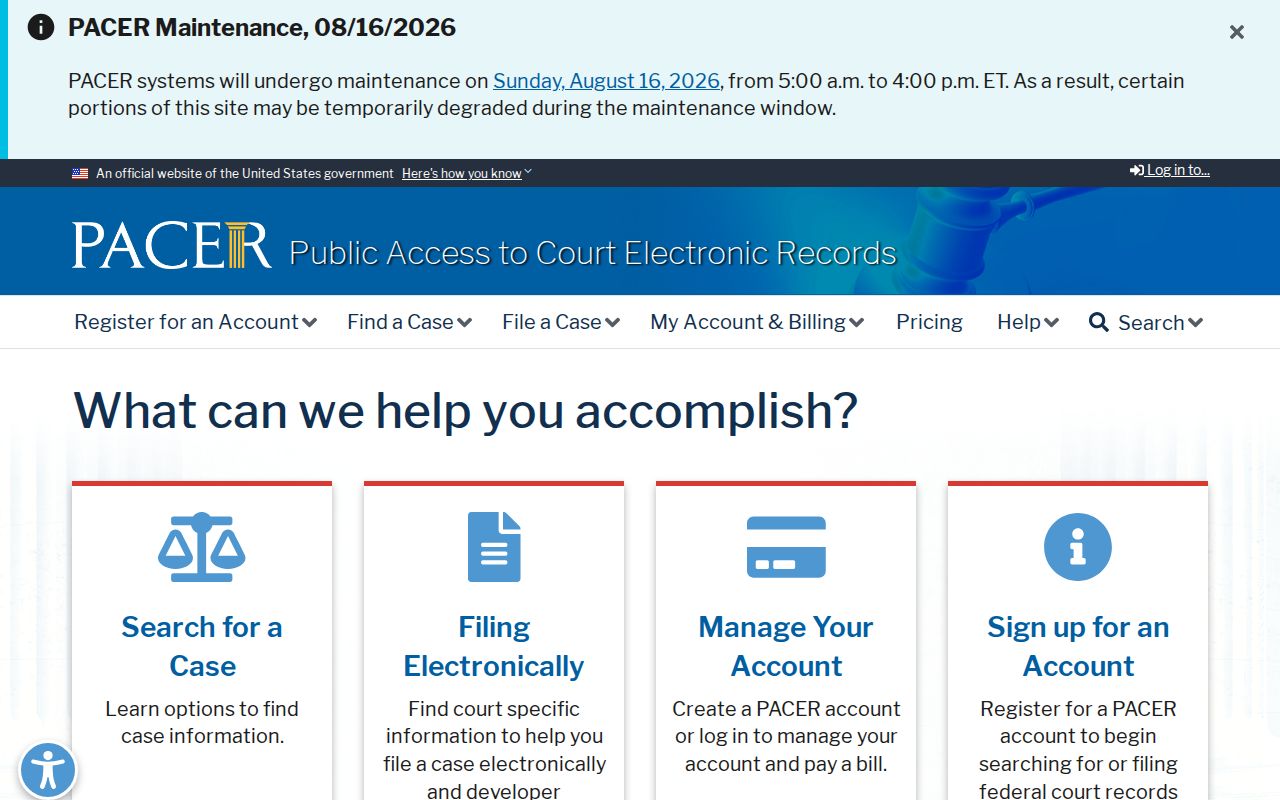
PACER illustrates the separate federal search path, with its own account and billing rules, apart from PAMEC and Mississippi local clerks.
The Northern District's official site identifies federal court information for northern Mississippi.
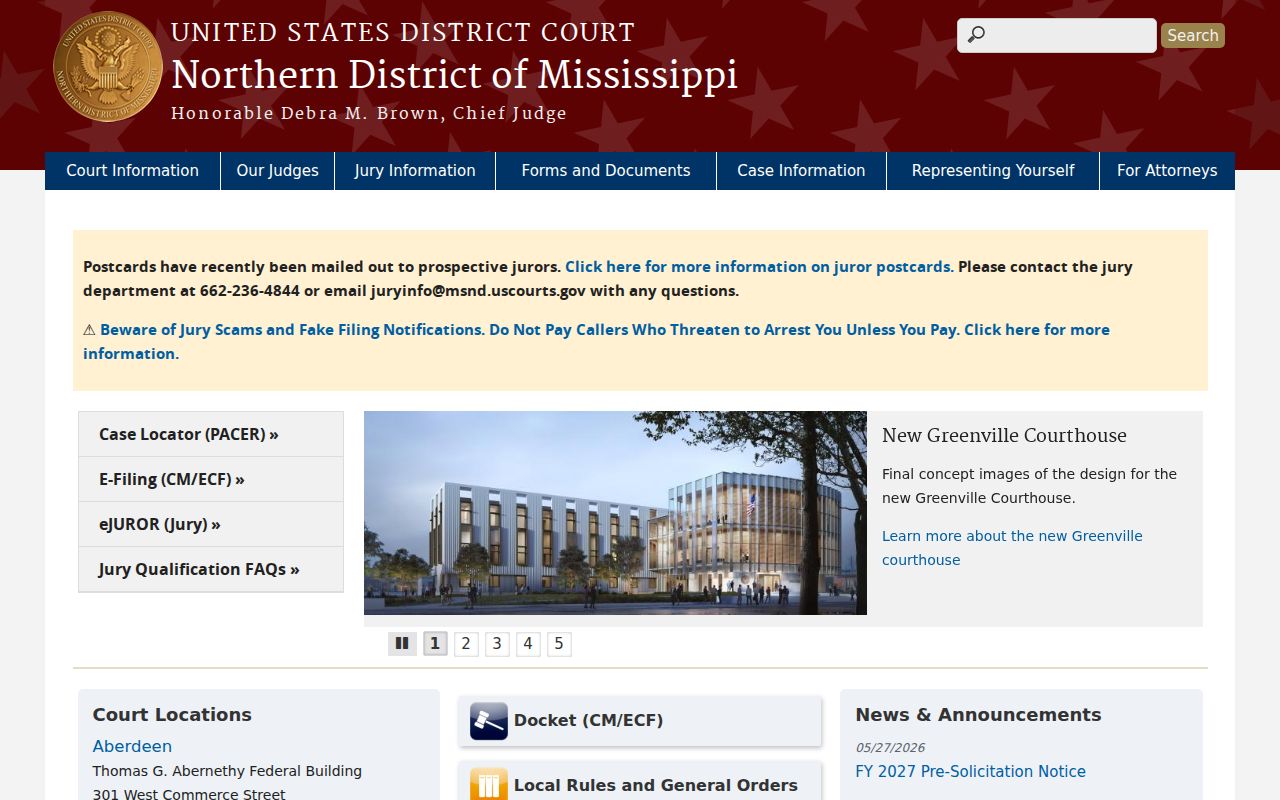
That district route helps identify the correct division before searching a federal docket or requesting a clerk-certified document.
The Southern District's official site serves the separate federal district covering central and southern Mississippi.
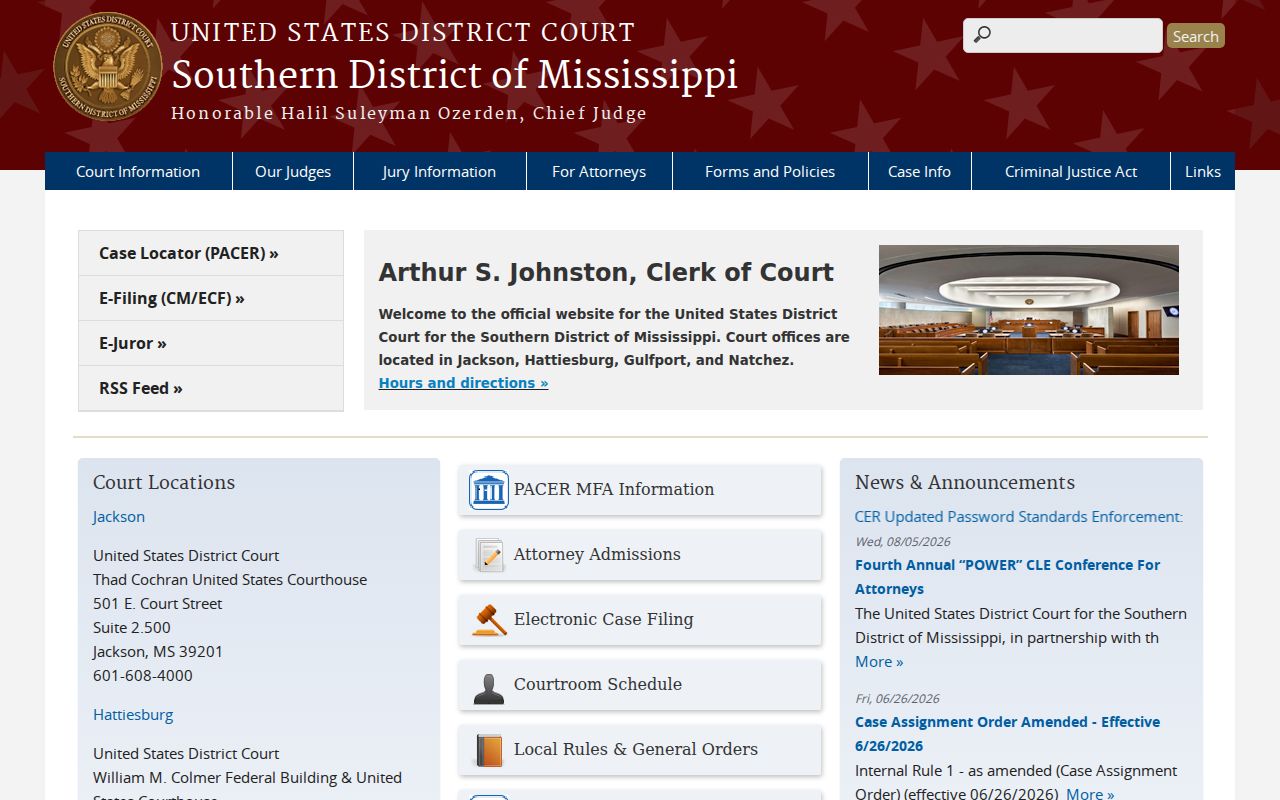
Its court information confirms that state and federal docket searches require different custodians, databases, and case identifiers.
Find Local Mississippi Court Dockets
For an older, non-MEC, Justice, or Municipal docket, open the directory of Mississippi counties and locate the filing court. Give the clerk the party names, case type, approximate year, and exact cause number if available. Ask whether the docket is electronic, in a bound index, archived off-site, or transferred after appeal. Specify whether only the chronological register is needed or whether particular orders and pleadings are also required. A certified copy must come from the official custodian, not an online screenshot.